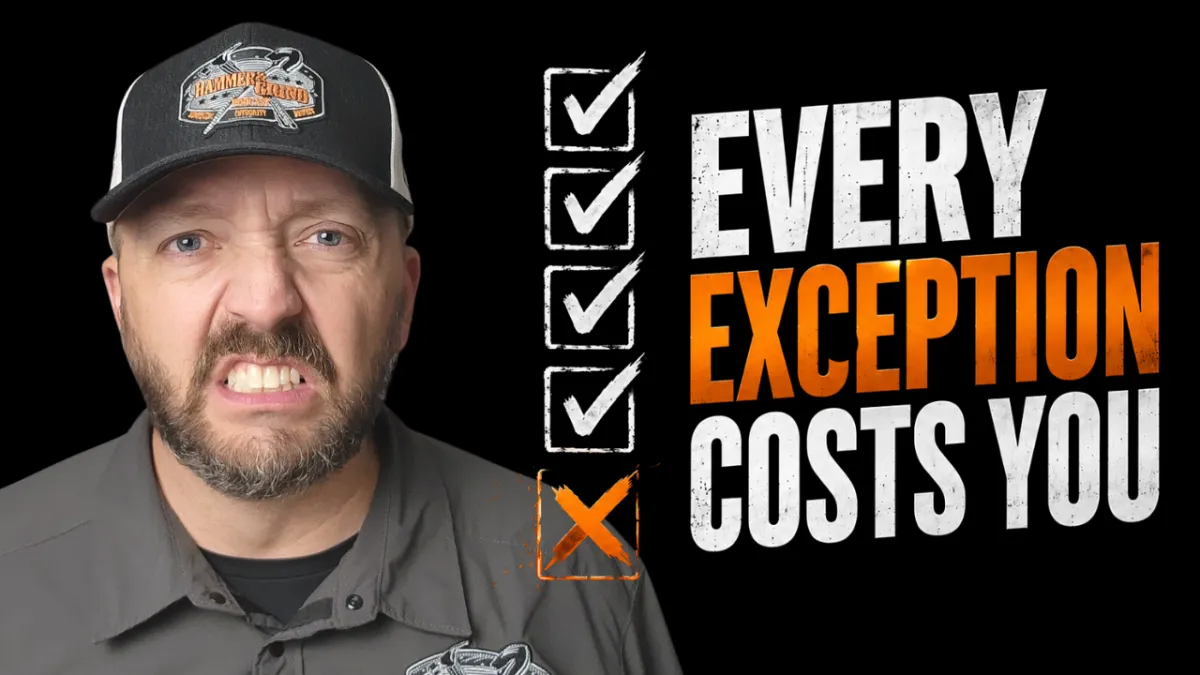
The S.A.C.R.E.D. Process: Why Consistency Is the Foundation of a Successful Contracting Business
Every successful contracting business has one thing in common: a proven process.
While many contractors believe flexibility is the key to great customer service, constantly making exceptions can create delays, reduce profits, and compromise the quality of your work.
Here are the main points and actionable steps to help you implement and protect your sacred process.
Main Points
1. Your Process is Not a Suggestion
Your process is a proven way of doing things, developed through experience, research, and sometimes, trial and error. It's not a set of preferences that can be easily changed based on client demands. When you deviate from your process, you risk compromising the quality and consistency of your work.
2. Every Exception Creates Risk
Allowing exceptions to your process introduces risk into your projects. Whether it's letting a client provide their own materials or allowing them to do part of the work themselves, these exceptions can lead to unforeseen problems. These small deviations can snowball into larger issues, affecting quality, schedule, communication, warranty, and profit.
3. Protecting the Process Protects the Result
A strong, well-defined process protects everyone involved—clients, employees, and the business itself. It ensures that you can deliver consistent, high-quality results every time. This consistency builds trust and confidence with your clients and team.
4. The SACRED Acronym
The sacred process can be broken down into the acronym SACRED:
S: Standardize the work
A: Align the customer
C: Control the variables
R: Respect the sequence
E: Enforce the boundaries
D: Deliver the result
Action Steps
1. Standardize Your Process
Take the time to document your process from start to finish. This includes everything from the initial client contact to the final review and follow-up. Make sure every team member understands and follows this process. Standardizing your process ensures that everyone is on the same page and that you can deliver consistent results.
2. Align and Educate Your Clients
Before starting any project, make sure your clients understand your process. Set clear expectations about how you work and why it's important to follow your process. This alignment helps prevent misunderstandings and sets the stage for a successful project.
3. Enforce the Boundaries
Be firm in enforcing your process. When clients request exceptions, explain why you can't accommodate them and how sticking to the process ensures the best results. Use phrases like, "We don't do it that way because it creates risk," to help clients understand the importance of following the process.
4. Use the 3P Rule
Implement the "3P" rule in your business: Protect the Proven Process. Make it a part of your company culture. Whenever something goes wrong, ask, "Did you 3P it?" This reinforces the importance of sticking to the process and helps identify where deviations may have occurred.
The sacred process is more than just a set of guidelines; it's the backbone of your business. By standardizing your process, aligning your clients, and enforcing boundaries, you can ensure consistent, high-quality results. Remember, protecting the process is not about being difficult; it's about being responsible for the outcome. So, take these steps to safeguard your process and, in turn, protect your promise to your clients
Resources
Download the accompaning worksheets to help create your S.A.C.R.E.D process and enforce 3P accountability in your business. https://go.hammercrm.com/widget/form/4Bws6E9GGX0RZPoED1bn
Want to go deeper?
Check out the Contractor Profit Blueprint: https://www.thecontractorprofitblueprint.com/
Book a strategy call with Brad: https://hammerandgrind.com/qualification-website


