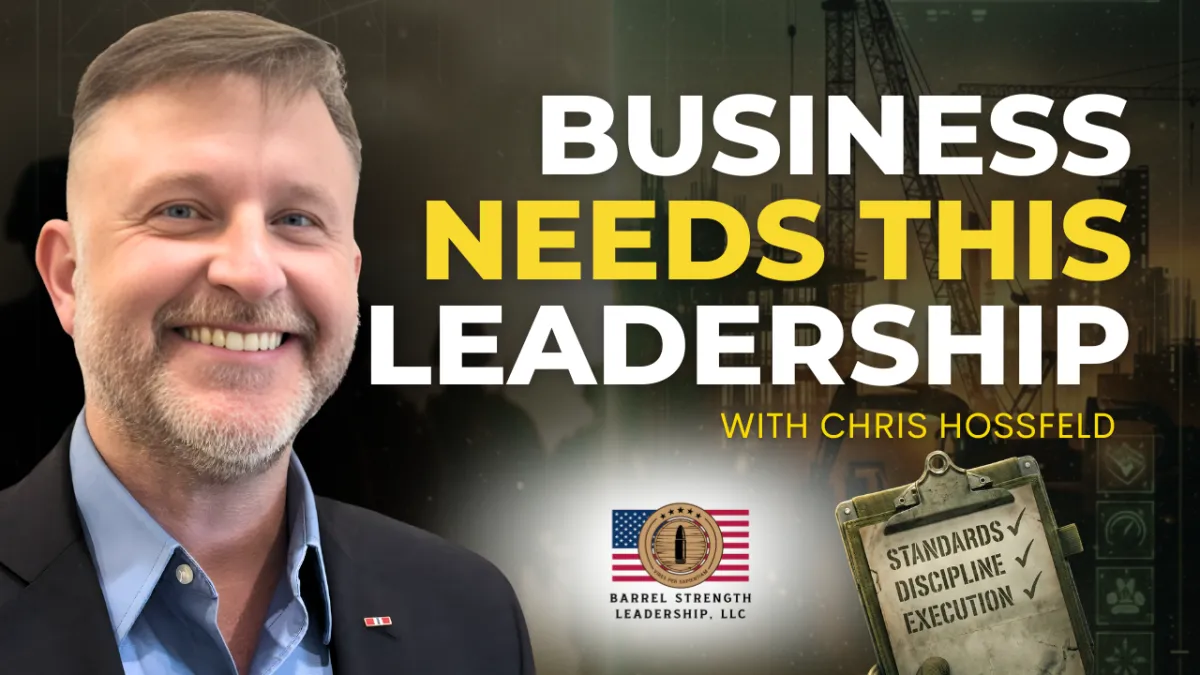
Leadership Lessons from Military to Small Business
Running a small business often feels like being in constant reaction mode: putting out fires, managing people, and making decisions on the fly. But what if the leadership principles used in the military could bring clarity, discipline, and consistency to your business?
Here are the main points discussed and actionable steps you can take to enhance leadership within your organization.
Key Takeaways
1. Leadership vs. Management
One of the fundamental distinctions Chris emphasized is the difference between leadership and management. While management involves overseeing and directing tasks, leadership is about inspiring and empowering your team. Effective leaders focus on getting the best out of their people by leveraging their strengths and mitigating their weaknesses.
2. Communication is Critical
Communication is the cornerstone of effective leadership. Chris highlighted that message sent does not always equal message received. Effective communication involves not just sending a message but ensuring it is understood and acted upon. This two-way street of communication builds trust and ensures everyone is on the same page.
3. Standards and Discipline
Standards are not suggestions. They are the benchmarks that ensure consistency and quality. Chris pointed out that maintaining high standards and discipline does not mean micromanaging but rather ensuring that everyone knows what is expected and is held accountable.
4. Pre-Planning and Systems
Pre-planning is crucial for the success of any project. In the military, extensive planning is done to anticipate various scenarios and outcomes. Similarly, in business, taking the time to plan can save you from costly mistakes and inefficiencies. Chris emphasized the importance of having a clear vision and working backward to identify the steps needed to achieve that vision.
5. After Action Reviews (AARs)
After Action Reviews, or job costing, are essential for continuous improvement. Chris suggested that only 40% of the time should be spent on what happened, while the remaining 60% should focus on what could be done better and how to implement those improvements. This approach shifts the focus from blame to constructive problem-solving.
Action Steps
1. Differentiate Between Leadership and Management
Empower Your Team: Focus on developing your team’s strengths and providing them with opportunities to grow. Avoid the temptation to do everything yourself or micromanage.
Encourage Initiative: Create an environment where team members feel comfortable taking initiative and making decisions.
2. Enhance Communication
Set Clear Expectations: Clearly communicate your expectations and ensure they are understood. Use multiple channels if necessary to confirm that the message has been received.
Foster Open Dialogue: Encourage feedback and open communication. Make it clear that you value input from all team members.
3. Implement Standards and Discipline
Define Standards: Clearly define the standards for your business and communicate them to your team. Ensure everyone understands that these are not suggestions but expectations.
Regular Inspections: Conduct regular inspections to ensure standards are being met. Use these inspections as teaching moments rather than just opportunities to find faults.
4. Prioritize Pre-Planning
Develop a Planning Process: Create a structured planning process for your projects. Identify the end goal and work backward to outline the necessary steps.
Anticipate Challenges: Consider potential challenges and develop contingency plans. This proactive approach can save time and resources in the long run.
5. Conduct After Action Reviews
Schedule Regular AARs: After completing a project, hold a review session to discuss what went well and what could be improved.
Focus on Solutions: Spend the majority of the time brainstorming solutions and improvements rather than dwelling on what went wrong. This positive approach fosters a culture of continuous improvement.
By incorporating these military-inspired leadership principles into your small business, you can create a more effective, efficient, and motivated team. Leadership is not just about managing tasks but about inspiring and empowering your team to achieve their best.


